 Crossley "15.7" and
"2-Litre Sports" cars
Crossley "15.7" and
"2-Litre Sports" cars
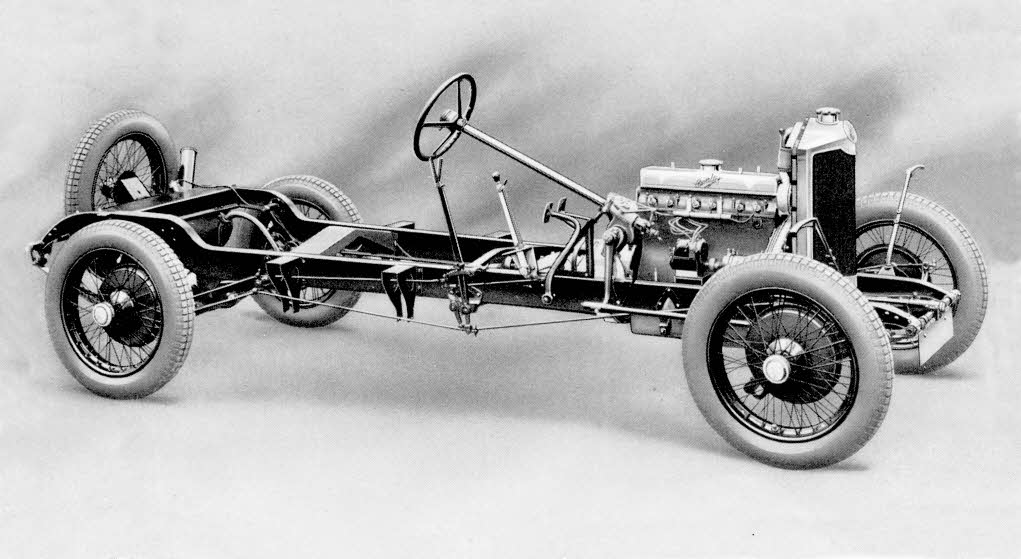
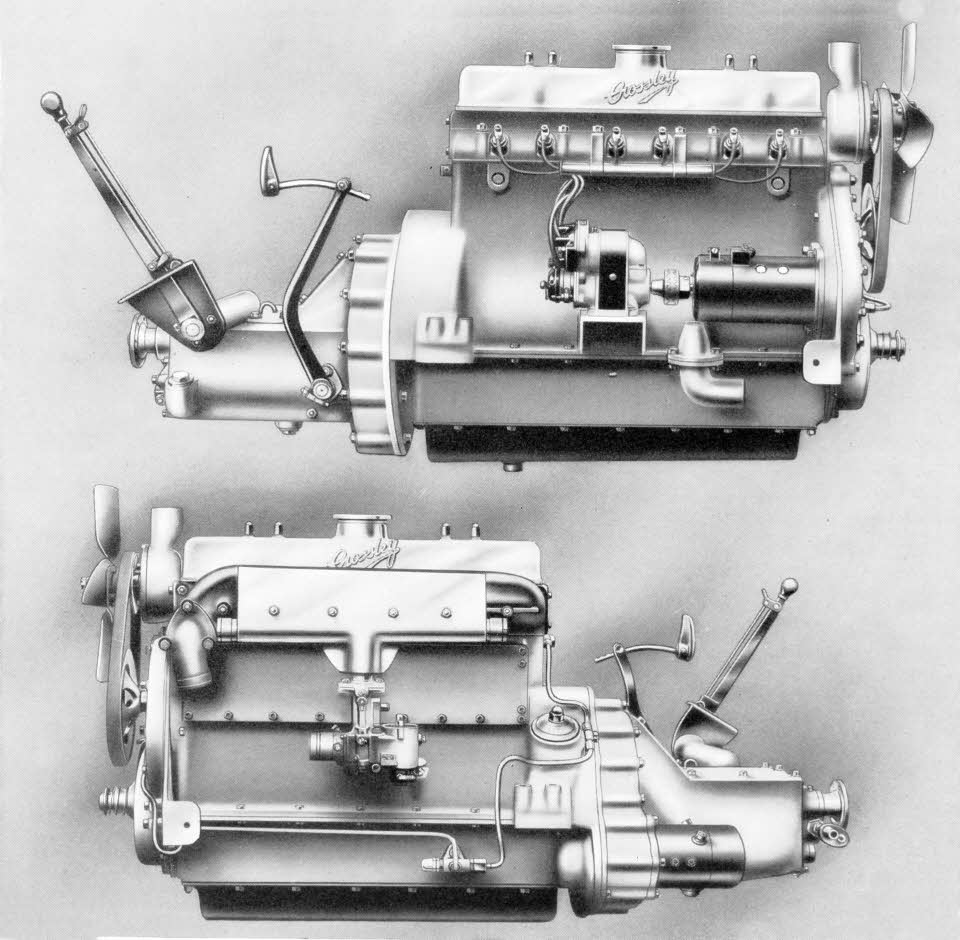
The Crossley 15.7 was manufactured between 1928 and 1931 replacing the 14hp and was fitted with a new 6-cylinder engine. In 1931 the model was superseded by the similar Silver model.
Chassis numbers for the 15.7 range from 80001 to 81264. Approximately 1200 15.7s were made.
The 2 litre sports with tuned engine and revised manifolding was introduced in 1928 and numbered from 81400. It should not be confused with the similarly named 1930s 2 litre Sports Saloon which used a completely new chassis.
BODY STYLES
Fabric saloon
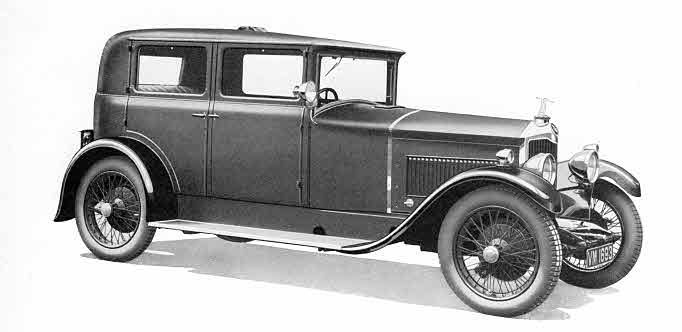
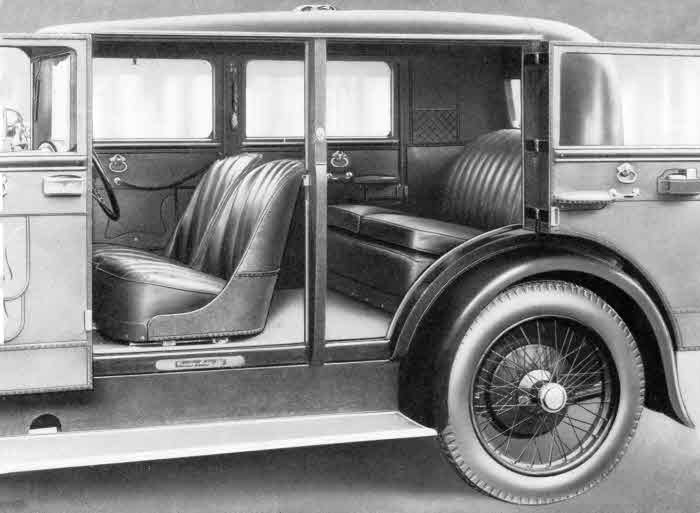
The four door Fabric saloon. The upholstery was "soft brown leather"
and the fabric body covering was described as "very easy to keep clean
with exceptional wearing qualities".
Equipment included a top hinged opening windscreen, a blind to the rear
window operated by the driver, a roof ventilator, a cigar lighter,
interior light, a mascot and an inspection light under the bonnet.
£550 (1928)
£550(1929)
2 Litre sports
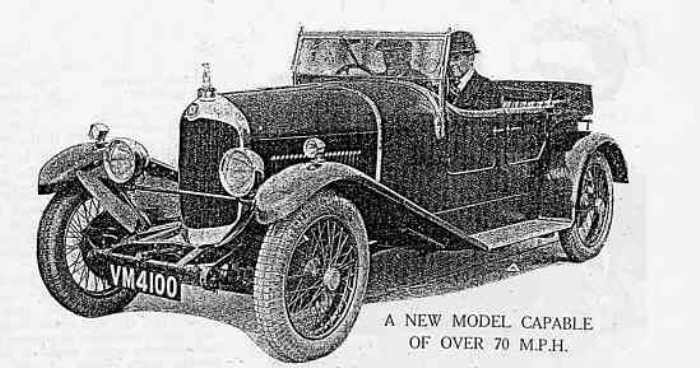
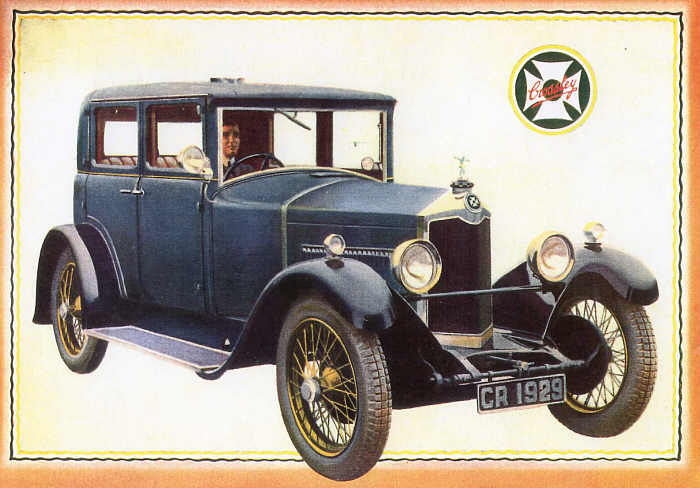
The Two-litre sports model was claimed to be capable of reaching 75 miles per hour (120kph) by having a higher output engine than the other models. The seats had pneumatic cushions.
Touring car £625 (1928)
Fabric saloon £675 (1928) £695 (1929)
Chassis only £475 (1928)
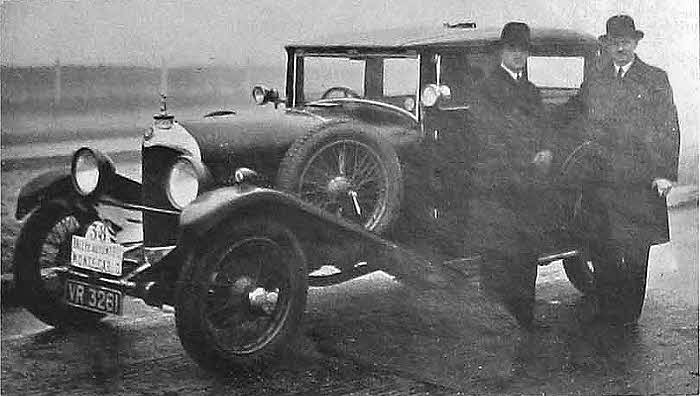
The fabric saloon in the middle picture was entered in the 1930 Monte
Carlo Rally by Mr J. L. Finnigan.
The saloon was sometimes named "Shelsley" after the pre-WW1 sporting model.
4/5-seat tourer
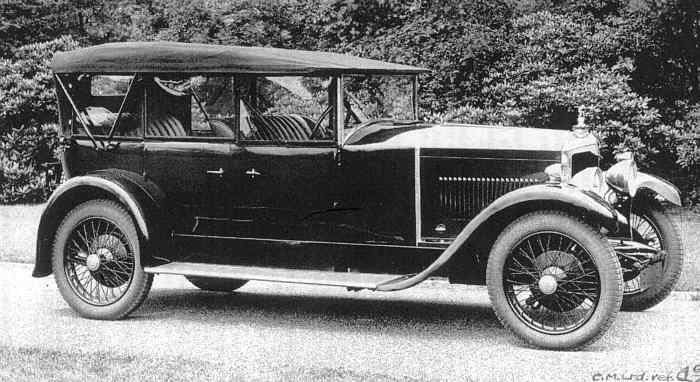
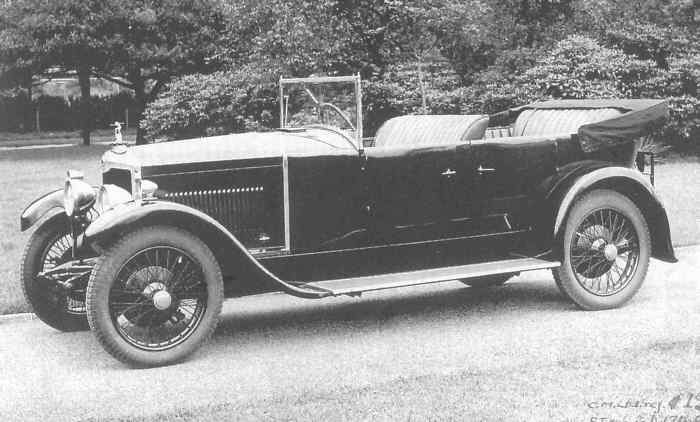
The 15.7 four-door, five-seat tourer. Weather equipment included metal framed sidescreens which could be stored behind the rear seat. The sidescreens could remain in place with the hood down.
It could be ordered in blue or maroon cellulose finish with leather seats to match.
£495 (1928)
£495 (1929)
15.7 saloon
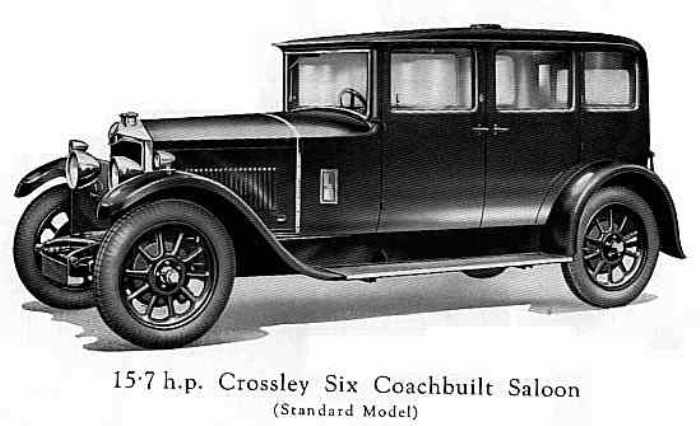
15.7 four door Standard saloon.
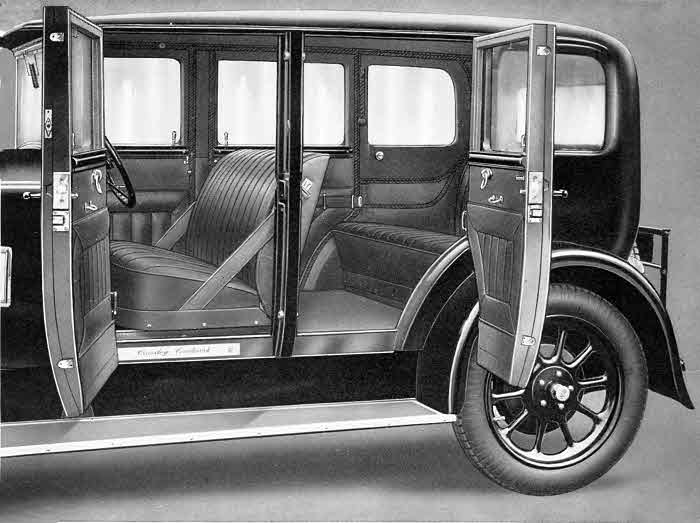
Standard saloon interior showing the bench front seat and simpler fittings.
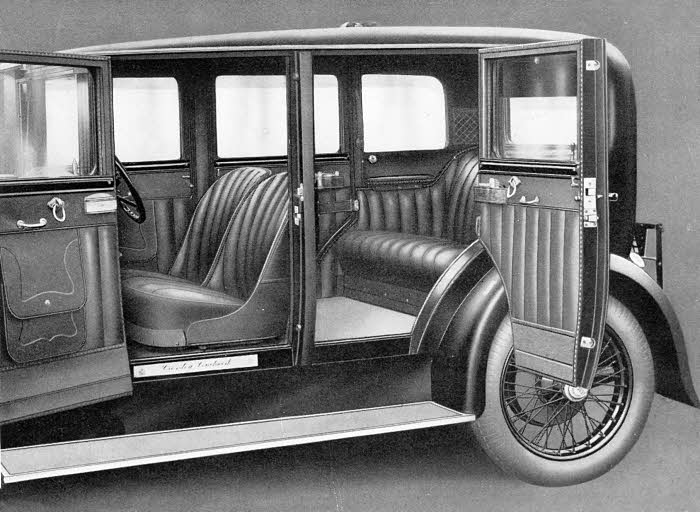
De-Luxe saloon interior with individual front seats.
Standard or popular £498 (1929)
De-Luxe £575 (1929)
De-luxe models had wire wheels and individual front seats, the Standard,
artillery wheels and a one piece front seat with painted rather than
plated headlamps. Both models were finished in blue or maroon cellulose
with brown leather upholstery.
15.7 Sportsman's Coupé
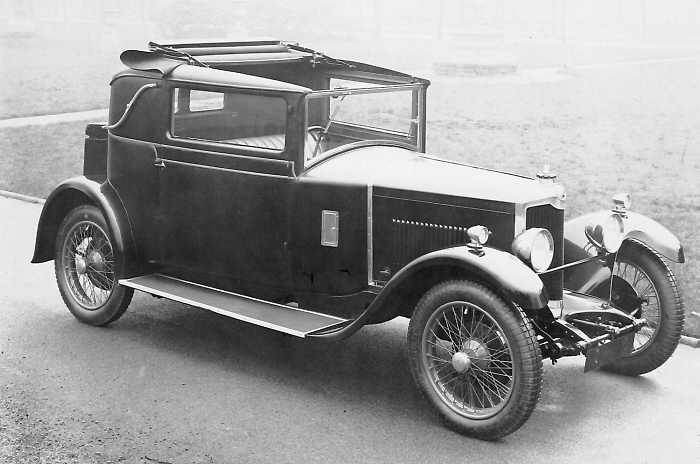
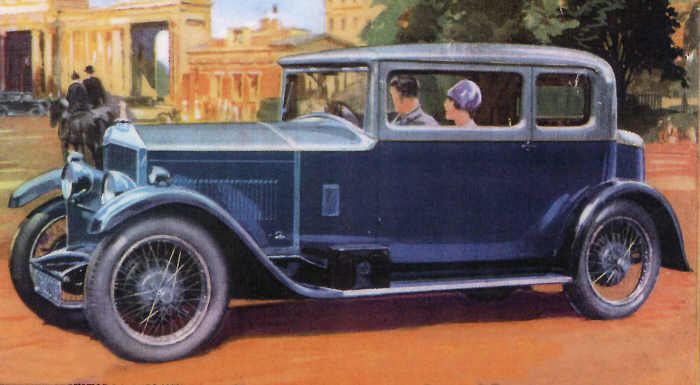
The 15.7 "Sportsmans" 4/5 seat coupé was made in two versions. (Both types were available with either fabric or metal bodies).
The fabric version was finished in black with red wheels.
Two light drophead £495 (fabric) £550 (coachbuilt) (1929)
Two or four light fixed head £550 (1929).
15.7 limousine
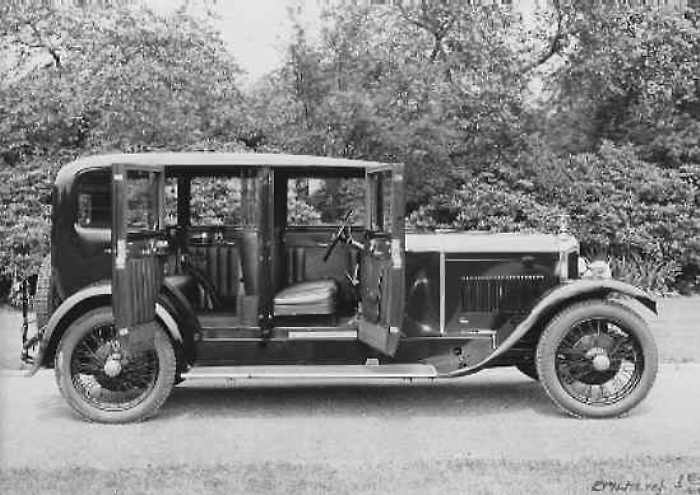
15.7 Enclosed Limousine. There was a partition with sliding window between the driver and passenger.
The car was available in blue or maroon cellulose finish with brown leather seats. The rear seats could be ordered in cloth.
£595 (1928)
£595 (1929)
Early cars to about chassis number 80600 had a narrow radiator, later cars a wider one. The 2 litre Sports Model had a more rounded radiator.
The above are all Crossley factory bodies. Cars were also supplied in chassis form to independent coach builders
The prices quoted are from contemporary advertisements.
SPECIFICATION
6.5:1 (sports model)
Autovac petrol pump
62bhp at 4000 rpm (sports)
Petrol tank capacity 13 gallons (59 litres) including 2 gallon (9 litre) reserve
Right hand side change. Gear box in-unit with engine.
ratio 5:1 (15.7 & Sports)
Electric lighting with dipping headlights
Fabric saloon-laden - 29cwt (1470 kg)
Turning circle - left 41 feet (12.5 metres) right 38 feet 8 inches (11.8 metres)
Hand brake operates on separate shoes on rear wheels on pre-Bendix models. With the Bendix system it operates on all wheels.
Sport 2 litre - Rudge-Whitworth wire wheels 4.75 or 5.25 x 21, later 5.25 x 20 or 6.00 x 18