 Crossley "19.6" cars
The Crossley 19.6 was the company's first post World War I car. Design of it started in 1916 under T. D. Wishart who had been appointed as Chief Designer in 1915. It was launched at London's Olympia Motor Show in 1920. Deliveries commenced in 1921 and the final cars seem to have been made in 1926. Approximately 1150 were made.
Four wheel brakes were an option from 1924 at a cost of £35.
It was claimed that the car could be driven in top gear from 5 mph to 60 mph.
Known chassis numbers range from 16100 to 17141.
Engine and chassis
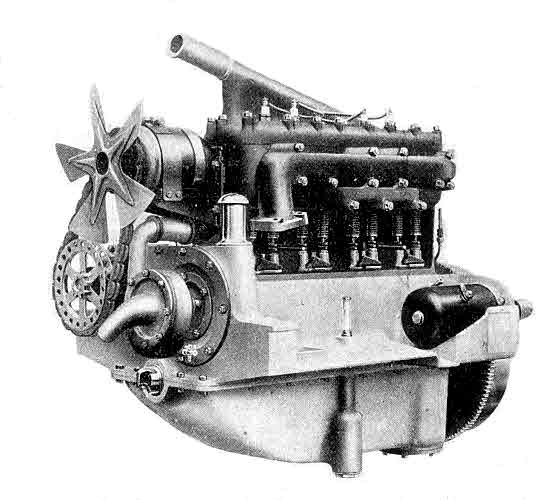
The four-cylinder 19.6 engine.
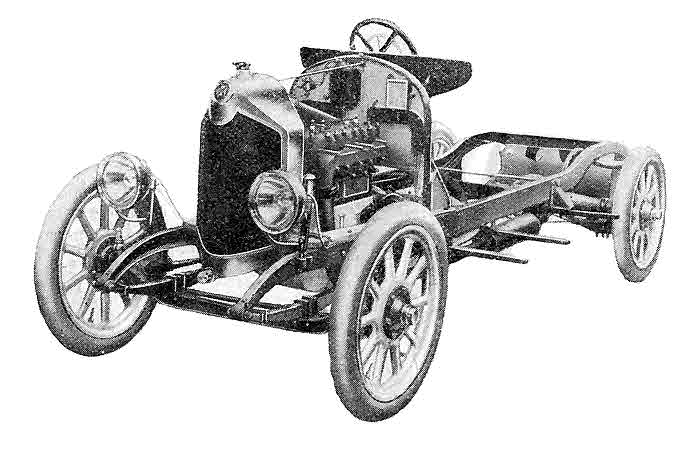
The two-wheel brake chassis .
Body styles
Seven-seater landaulette
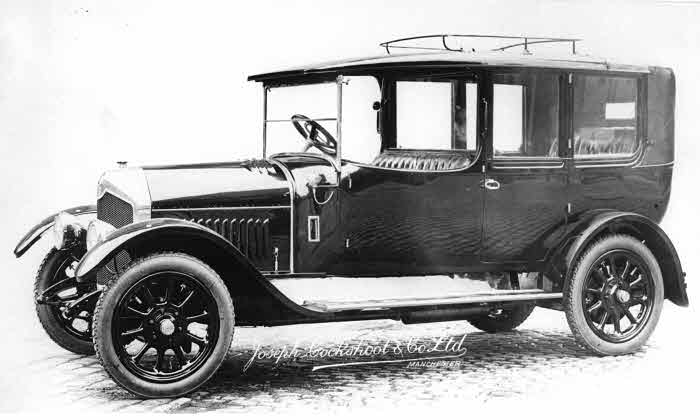
This body is by coachbuilders Joseph Cockshoot & Co of Manchester.
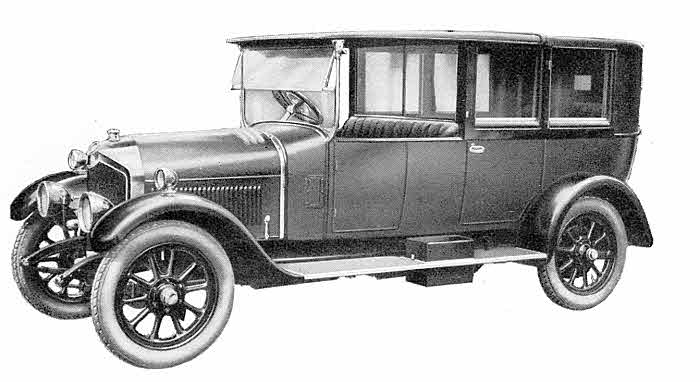
This illustration shows the Landaulette body offered by the Crossley
factory.
The car is sometimes listed as a Seven and at other times as a Six-Seater Landaulette.
The interior was upholstered in Bedford cord, the front seats in leather. The carpet in the rear is described as "velvet pile".There were two extra folding seats in the rear. The falling head (rear roof) was covered in enamelled leather. There was an adjustable glass division behind the driver.
In 1922 colours were bright royal blue, deep mauve or neutral grey.
£1170 (1921)
£1095 (1923)
£995 (1924)
£995 (May 1925)
£1030 (1925)
Saloon-landaulette £1125 (May 1925)
Five-seat saloon
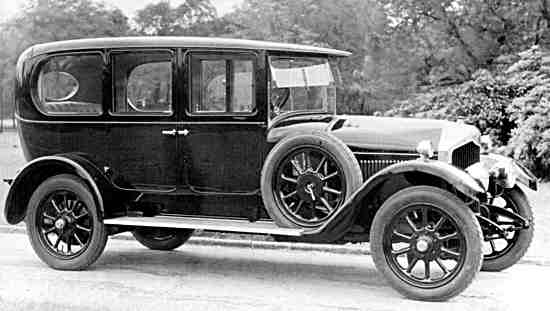
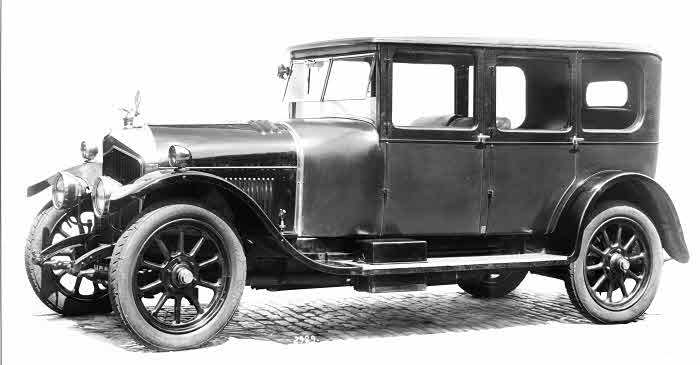
Another Saloon with coachwork by an unknown coachbuilder
"For town, theatre, social functions and long distance winter driving, the Crossley 19.6 h.p. Saloon meets every requirement."
The De-Luxe model was supplied with luggage grid, Gabriel Snubbers, windscreen wiper and clock.
1922 colours were bright royal blue, deep mauve or neutral grey with Bedford cord upholstery..
£1120 (1922)
£1120 (1923)
£995 (1924)
£995 (May 1925)
£1030 (1925)
saloon-limousine £1020 (May 1925)
Five-seat touring car
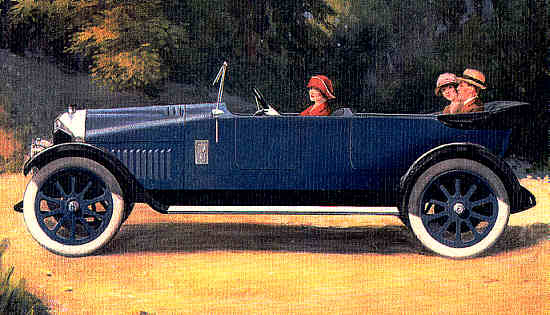
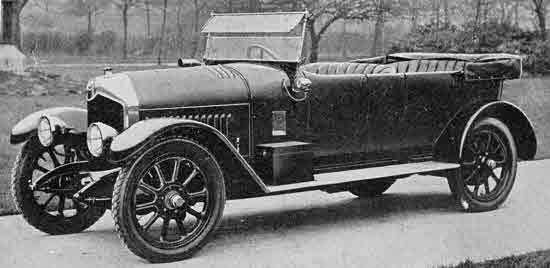
The De-Luxe model was supplied with rear windscreen, luggage grid,
Gabriel Snubbers and clock.
The 1922 catalogue lists colours as deep green, battleship grey, tobac brown or smoke blue with upholstery of the same shade.
£1085 (1920)
£895 (1920)
£795 (1922)
£795 (1923)
£750 (1924)
£750 (May 1925)
£810 (1925)
Two-seat touring car
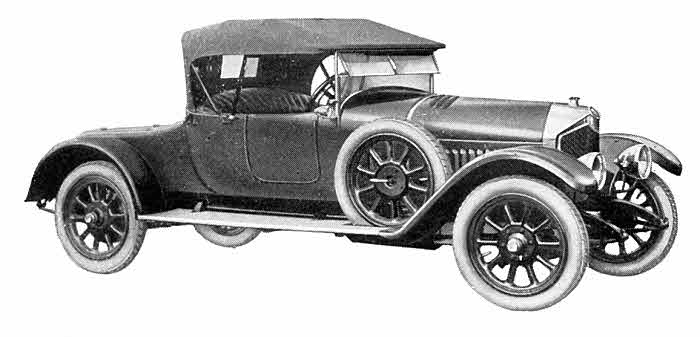
A photograph of this coachwork appears in the 1924 and 1925 brochures
but with no further details.
Four-seat drop head coupé

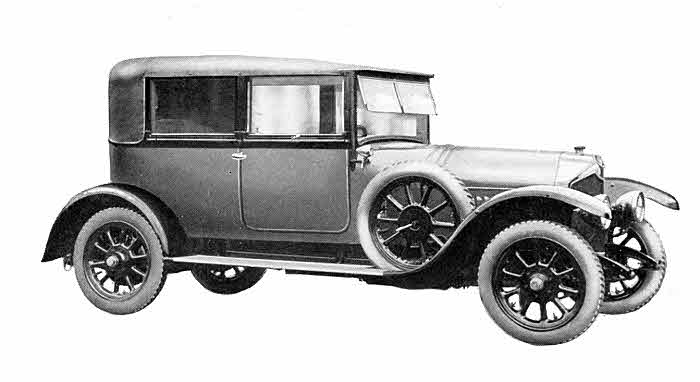
These illustrate the two-door car as offered by Crossley. The front seats were individual with the left hand seat hinged to allow access to the rear seat.in 1922 the colours offered were bright royal blue, deep mauve or neutral grey with Bedford Cord or leather upholstery.
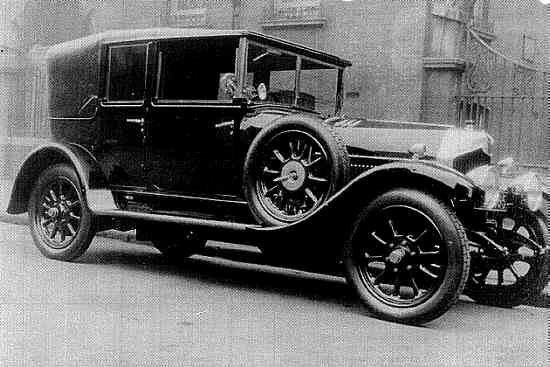
This four-door version was built for the Prince of Wales in 1923 with
coachwork by Barker. It was painted dark blue with black wings. There
was an openable division screen behind the front seats "making the car
eminently suitable for both owner-driver as well as chauffeur".
The interior was upholstered in Bedford cord.
It is not known if this coachwork was also available to public buyers.
£1170 (1921)
£1095 (1922)
£1095 (1923)
£995 (1924)
£995 (May 1925)
Two-seat coupé
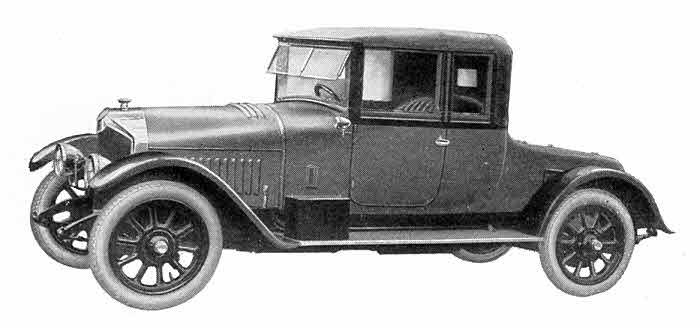
A photograph of this coachwork appears in the 1924 and 1925 brochures but with no further details.
Two-door sports
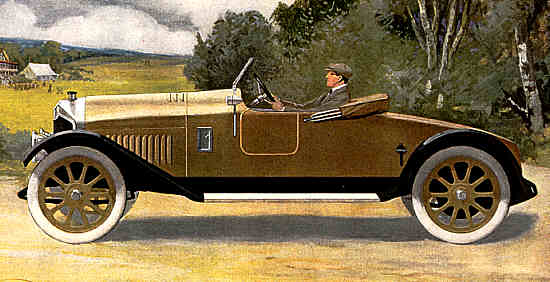
£1100 (1920)
£920 (1921)
No longer listed after 1923. The sports models had a lighter chassis
section of 4.5 inches (115 mm) as against 5.5 inches (140mm) on the
heavier bodied cars, an external handbrake and cut-down windscreen. They
were presumably withdrawn on the introduction of the 20/70
model.
The 1922 catalogue lists colours as primrose with black leather or grey with red leather upholstery.
The 1924 catalogue also includes a 2 seater Touring car of similar appearance to the 2 door sports.
Four-door sports
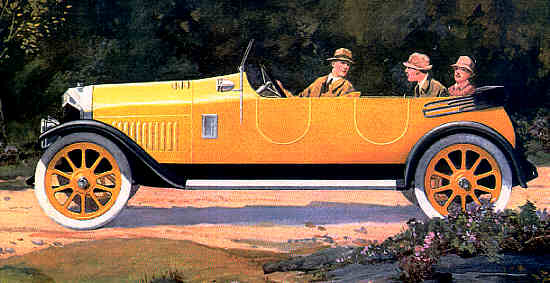
This car was a four-seat version of the 2-door sports. It had
three doors with no door on the driver's side at the front.
Luggage space was provided in a compartment behind the rear seat.
No longer listed after 1923
£1,150 (1920)
£945(1921)
The above, except where stated, are all Crossley factory bodies. Cars were also supplied in chassis form to independent coach builders.
Colours quoted in the 1922 catalogue were:-
- two-seater sports - primrose with black leather upholstery or grey with red leather upholstery.
- five-seater tourer - deep green, battleship grey, tabac brown or smoke blue each with matching leather upholstery.
- four-seater coupé, seven seater landaulette, five seater saloon - bright royal blue, deep mauve or neutral grey with Bedford cord or leather upholstery.
The wings were always black.
The prices quoted are from contemporary advertisements.
Four-wheel brakes using the Perrot system were £35 extra in 1924 but were included in the price from late 1925. Front-wheel brake cars have strengthening to the chassis front dumb irons, modified wheel bearings and wider front springs as well as a modified axle.
Specification
Crossley-Stromberg OE-1 (Sports models)
Petrol feed by Autovac.
petrol tank capacity 14½ gallons (66 litres)
ratios - 1:1, 1.55:1, 2.38:1, 3.76:1
ratios - 3.57:1 (touring cars and coupés)
3.33:1 (two seater sports)
4.08:1 (Landaulettes and saloons)
Electric horn, electric starter, battery on the running board, two headlights, two front side lights, one tail light, dash light and interior light.
28 cwt 2 qrs (1447 kg) (tourer)
32 cwt (1625 kg) (saloon)
Hand brake operates on rear-wheels using cast iron shoes.
Front brakes - optional from 1924.
Foot pedal operated transmission brake with 'Ferodo' linings.
tyres - 820mm x 120mm